
Have you been involved in an accident, experienced an injury during a game, or suffer from debilitating migraines? Do you just not feel like you used to? Dr. Woodhall is here to help. With comprehensive spinal and extremity manipulation, he addresses not just these conditions but many others as well.
He believes in empowering you on your healing journey. Dr. Woodhall will guide you in adopting healthier habits through personalized advice on diet, exercise, stretching, and proper ergonomics—skills that will help you lift, move, and manage your daily activities with ease.
Your health is a partnership, and with Dr. Woodhall’s support, you’ll be an active participant in your recovery and ongoing structural health. Together, we will create a tailored treatment plan designed to get you back on your feet and feeling your best.
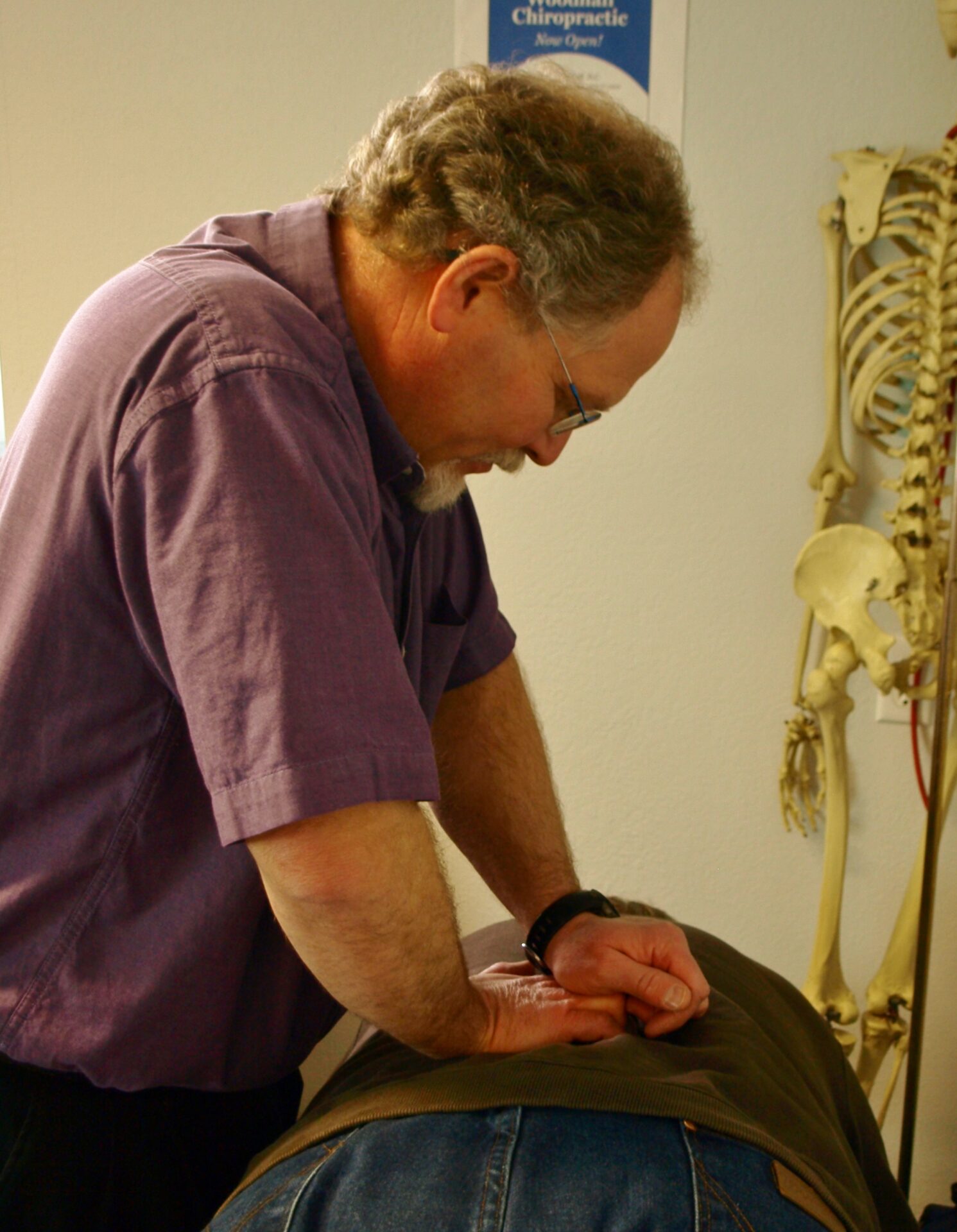
Chiropractic care goes beyond just relieving back and neck pain; it supports overall wellness through nutrition, adjustments, and holistic practices. Dr. Robert Woodhall is dedicated to partnering with his patients for comprehensive care that addresses physical, mental, and spiritual health. He focuses on identifying and treating the root causes of pain and dysfunction to help you get back to your best.
Click on the specific Chiropractic Techniques to read a brief descriptions of each chiropractic technique.

Gillet Motion Palpation is a chiropractic technique used to assess joint mobility and function. By feeling and observing the movement of joints, chiropractors can identify areas of restricted motion or dysfunction. This technique helps in diagnosing issues related to spinal and joint health, guiding targeted treatments to improve mobility and alleviate pain.
The Activator Method is a chiropractic technique that uses a handheld, spring-loaded instrument to deliver precise, gentle adjustments to the spine and other joints. This method is designed to improve alignment, reduce pain, and enhance mobility without the need for manual manipulation. It is often used for patients who prefer a softer approach or when manual adjustments are not suitable.
The Diversified Technique is a chiropractic method involving manual adjustments to correct spinal misalignments, improve joint function, and relieve pain. It uses specific manual thrusts to restore movement and alignment in the spine and other joints, and is one of the most commonly used chiropractic techniques.
The National Upper Cervical Chiropractic Association (NUCCA) technique focuses specifically on the upper cervical spine (the top two vertebrae). Adjustments are performed carefully to restore balance and alignment in the cervical area, which can have a significant impact on overall body function.
The Thompson Drop Technique is a chiropractic method that uses a specialized table with controlled, gentle dropping sections. The chiropractor applies a precise, quick thrust to realign the spine, which is assisted by the dropping action of the table. This technique helps to gently restore joint mobility and reduce pain with minimal force.
When choosing a chiropractor ask
You should also ask if they’ve treated people with your specific condition and what their goals are for your treatment.
During an initial consulation, Dr.Woodhall will go over this prior to any manipulation being done.
You should avoid chiropractic care if you have
Also, seek immediate medical attention if you experience symptoms like sudden severe headache, numbness, weakness, or loss of bladder/bowel control, as these could signal serious issues like spinal cord compression or a stroke, which require medical care, not chiropractic adjustments. Individuals with other medical conditions, like cancer, severe herniated discs, or certain vascular disorders, should consult their doctor before considering chiropractic treatment.
A good chiropractor will answer all of your questions and help you understand your treatment plan. They will do anything to make you feel comfortable while showing empathy and building a personal connection with you. A bad chiropractor will rush the treatment and won’t care about your needs or feelings.
Inform your chiropractor about any known medical conditions. Your chiropractor may need to avoid certain techniques or movements depending on your conditions. Your chiropractor will not want to manipulate any areas that may cause you pain or otherwise trigger other symptoms.
Chiropractors recommend regular visits because chiropractic care involves training the body to hold proper alignment, similar to how a gym workout builds muscle over time. A single adjustment provides temporary relief, but it takes repeated care for muscles, ligaments, and joints to “learn” new, healthy patterns. Regular visits can also be preventative, helping to catch misalignments before they become bigger problems and maintaining overall spinal and nervous system health.
Chiropractic science focuses on the musculoskeletal and nervous systems, believing that proper alignment of the spine is crucial for overall health and function. Chiropractors diagnose, treat, and prevent mechanical disorders of these systems using hands-on techniques like spinal manipulation (adjustments). These adjustments aim to restore joint mobility, alleviate nerve pressure, reduce muscle tension, and stimulate the body’s natural healing processes

Seeing a chiropractor is not only for back pain and neck pain. Chiropractic care is an excellent way to keep your body at its peak performance through adjustment, exercise and stretching, and overall wellness. In addition, chiropractic care has been known to help a wide range of conditions from fibromyalgia to diabetes. Dr. Robert Woodhall DC is committed to educating and partnering with his patients for whole body care: physically, and mentally. and spiritually. He will work with you to target the root of your pain and physical dysfunction and get you back to being your best.